
Fungal detox: investors eye mycelium bioremediation
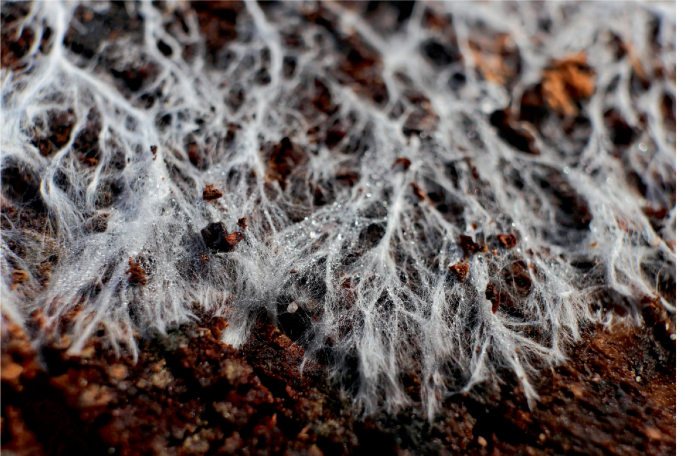


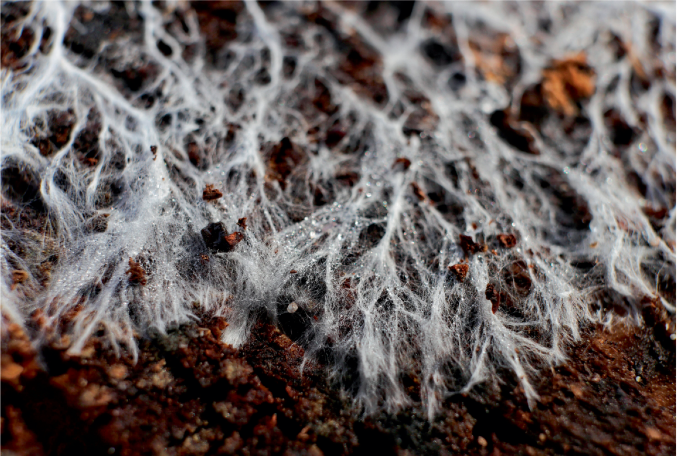

The digestive prowess of fungi to decontaminate natural environments from polluting plastics, oil spills, toxic waste and even radiation is gaining traction around the globe.
Investors are seeing a fungi-powered future. US bioremediation company Mycocycle raised $3.6 million in May 2024 to clean up construction waste with the help of fungi. And in April 2024, Belgian biotech Novobiom raised 1.97 million Euros ($ 2.23 million) to decontaminate polluted soil with mycelium-driven techniques.
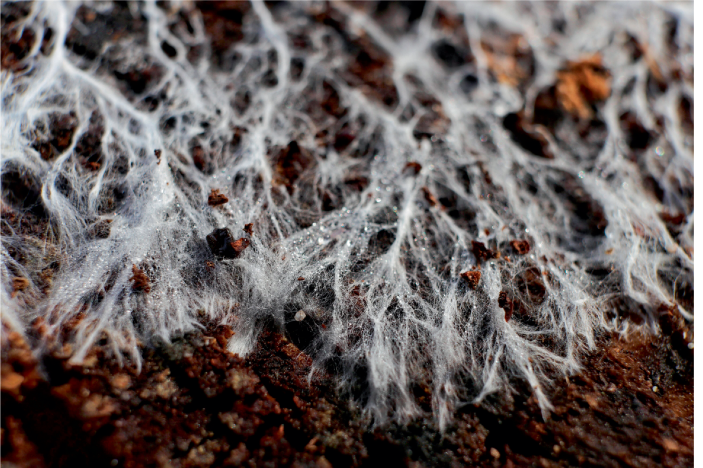
Fungal mycelia branch out underground. Environmental and Indigenous groups have used mycelia with success for soil and water remediation. Credit: Justin Long / Alamy Stock Photo
Eco-friendly technologies that use living agents to eliminate recalcitrant industrial toxins from soil, water and other contaminated environments, a technique known as bioremediation, are experiencing an upswing. The global bioremediation market was worth $13.8 billion in 2022 and is expected to reach $28.9 billion by 2030. Fungi-based remediation, in particular, is attracting most of the attention (Table 1). Whether it’s sewage sludge on farmland, the aftermath of industrial spills, construction waste or heavy metals, the aim is to clean up by letting mycelium feed on contaminants, leaving behind only benign biproducts.
Table 1 Selected mycoremediation companies
Mycelium is the body of the fungus, often found underground as a network of root-like filaments or hyphae, whereas the better-known mushrooms are the fruiting bodies, analogous to the apples of a tree. Because of its strength, flexibility and biodegradability, mycelium is an unusually versatile material that has already been harnessed as alternative leather for bags and clothes, degradable eco-packaging and even interior architecture. Its tactile qualities and density also make it an attractive meat substitute.
Susanne Gløersen, founder of the Future is Fungi Award for startups creating innovative solutions with mycelium, says: “Fungi is so untapped. We have this huge tool kit which [we] could leverage more. It’s the last frontier of biological discovery.”
Mycologist Paul Stamets began experimenting with mycelium for its cleansing power in the 1980s, when he installed outdoor mycelium beds to clean the runoff from a small herd of cows on his farm. Since then he has collaborated with the US Department of Defense to clean up DMMP, a neurotoxin deployed by Iraq in the Gulf War, with the enzymes produced by two species of ‘white rot’ fungi. UK-based activist and documentary maker Nicola Peel used fungi to help clear up oil spills left by Chevron in the Ecuadorian Amazon, and others applied mycoremediation solutions to the San Francisco Bay Cosco Busan oil spill in 2007, as well as to clean water after the wildfires in California. Now startups aim to scale up these natural solutions, and investors are backing them.
One US company, Mycocycle, upcycles used tires and removes toxins from industrial waste. Joanne Rodriguez, a former sustainability director for a construction company, understood the waste issues created by the building industry: the US Environmental Protection Agency estimates that 540 million tonnes of construction and demolition waste were generated in the US in 2018. Rodriguez started the company in 2020 to harness fungi’s ability to break down heavy hydrocarbons and transform them into useful biobased materials.
The mycelium digests gypsum (a calcium sulfate dihydrate mainly used for plaster), carpet and rubber. Customers receive a container with water and wood chips to feed the mycelium and provide the right conditions for white rot fungi to grow. The waste is then mixed in to create a bioreactor, where the enzymes produced by the mycelium break the styrene-butadiene bond in carpets and other waste materials. This process stops gypsum boards being disposed of in landfills and prevents them from giving off hydrogen sulfide gas when wet, as well as avoiding butadiene, an irritant, from being released into the environment. The decomposition is completed in two weeks, and what is left is a composite of mycelium and the original materials: a homogenous blend of material that can be used as fillers, fibers or foams. For every tonne of waste that they treat, they are able to reduce CO2 emissions by three tonnes, the company claims. It counts Meta as one of its customers and recently helped break down scrap drywall left over from the construction of a data center.
Contaminated land is another area where decomposer fungi are proving effective. More than 70% of the world’s land is degraded, and this could rise to 90% by 2050, reports the Joint Research Centre of the European Commission. Novobiom, located in Ottignies-Louvain-la-Neuve, Belgium, is using mycelium to clean contaminated industrial soils. Clients include waste management company Veolia and brownfield remediation company Valgo.
Belgian company Novobiom applies mycoremediation at polluted industrial sites. They mix contaminated earth with mycelium from Basidiomycota or Ascomycota fungi to form biopiles in which humidity and temperature can be controlled. The process ensures contaminant concentrations drop below the threshold set by environmental authorities, and although the cleansed soil can’t be used for agriculture, it can be safely reused in, for example, roadworks. Novobiom has already shown this process works at scale: they have run two pilots, remediating soil at industrial sites in France and Belgium. The decontamination treats high-molecular-weight polycyclic aromatic hydrocarbons containing up to six rings, as well as benzene, toluene, ethylbenzene and xylene.
Novobiom is now combining 25 different strains of mycelium to tailor solutions according to each client’s soil and microbiome characteristics. The company takes into account soil texture, carbon nutrients, nitrogen, minerals and oxygen, and if it detects any limitations, it can tweak the fungal treatment needed to decontaminate the soil. “For the moment, the baseline for soil bacteria is a fixed list of the most representative bacterial functions in soil,” says Novobiom co-founder Caroline Zaoui, “but we aim at a more tailored representation, especially for contaminated soil.”
Although bacteria can be used for bioremediation too, results have been inconsistent. Zaoui says that fungi are more effective because they count on both extracellular and intracellular enzymes to break down mineral oil, whereas bacteria need to be in close contact to the contaminant and internalize it to degrade it. “The longer the hydrocarbon chain, the more difficult it becomes for bacteria to internalize the molecule,” Zaoui says, adding, “As bacteria are very small, they can’t really move towards the contaminants. Mycelium [create] networks in the soil, can explore the soil and become closer to the contaminants.”
Novobiom has also joined the French recycling company Ecomaison for an R&D project to help dispose of mattresses. Five million mattresses are sold each year in France, and they have only a ten-year life span. The French government-backed Ecomaison can upcycle the latex, polyurethane foam and springs in the mattresses, but it is unable to upcycle the mattress covers because of their mix of natural and synthetic fibers. Novobiom’s fungi can enzymatically process the natural fibers (cellulose or protein) into sugars or amino acids and will leave behind the polyester. “We’re still a long way from industrialization, but this project represents a real opportunity, that we’re financing and for which we are contributing tonnages of textile mix,” says Gwendal Michel, R&D manager for Ecomaison.
Iranian researchers from Bu-Ali Sina University isolated fungal strains growing in oil-contaminated soil at an oil refinery in Arak. In a field study, they tested four fungal strains — Acromonium sp., Alternaria sp., Aspergillus terreus and Penicillium sp. — for their enzymatic efficiency. Two of these strains produced the enzymes catalase, peroxidase and phenol oxidase, and were able to cut petroleum levels by more than half in pots of contaminated soil. A study in India also found that ligninolytic enzymes released by several fungi can degrade polycyclic aromatic hydrocarbons.
Stockholm-based MycoMine is creating portable water treatment plants that use fungi to remove hydrocarbons. MycoMine was the joint winner with Novobiom as the best startup at the Future is Fungi Award in 2023.
After searching for extremophiles in deep oceans and hydrothermal systems, MycoMine co-founder Magnus Ivarsson found what he was searching for in the Stockholm Metro: fungi using oil for fuel. “When I saw them under the microscope, I could see how they kept these drops of oils within their cells. The idea came to me that this could be scaled up and used for cleaning up our environmental [problems],” says Ivarsson.
MycoMine has created mini-bioreactors called MycoCubes that they fill with fungi to remove oil and diesel from water. The fungal cytochrome p450 enzymes break down the toxic n-alkane hydrocarbons into small compounds that can be absorbed and used as food by the fungus. In 2022, they used these portable treatment plants during a pilot project at a disused mine polluted by oil. The fungal bioreactors cleaned one cubic meter every 20 days. The process is slow, but water in the mineshaft is now close to drinking quality: a dramatic improvement over the previous method that involved cleaning the water by incineration, a process that releases carbon dioxide into the air and leaves sludge to be placed in a landfill.
Even plastics — which are, after all, made from oil — are amenable to fungal breakdown. The London-based biomanufacturing company Biohm started looking at degrading plastic when in 2018 a mycelium they were working with consumed the plastic sponge sealing the jar of its container. Biohm is now using fungi to process polyurethane, polystyrene and polyester. While most companies claiming to digest plastic waste focus on creating second life plastics, Biohm aims to get rid of it in a circular system. Once the fungi’s enzymes have broken the waste streams into hydrocarbons and sugars, a process that releases carbon dioxide, Biohm combines this platform with photosynthesizing plants that absorb carbon dioxide to produce oxygen. This, in turn, feeds into the bioreactors or incubation rooms where the fungi are growing.
Biohm has found that white rot fungi, which are lignin degraders, are not altogether successful at breaking down plastic. Those that do have somehow mutated in response to plastic materials in the environment. In 2017, researchers in Pakistan discovered the fungus Aspergillus tubingensis eating plastic at a waste site in Islamabad. Researchers at the University of Sydney in 2023 noted how some species of fungi use extracellular enzymes to degrade complex polymer structures into smaller units and use these as their carbon source. A recent study found a marine fungus consuming plastic in the floating plastic pile in the Great Pacific Garbage Patch. The fungus Parengyodontium album was specifically able to speed up the degradation of UV-exposed polyethylene, the material most commonly used for making plastic bottles and other consumer products.
Because different fungi seem to specialize in what type of plastic they break down, Biohm has also created what could be called a fungal production line. When one fungus has carried out a task, another fungus completes the next stage. They are now intending to carry out a larger pilot project that will focus on decomposing plastics by the tonne. Ehab Sayed, Biohm chief evolution officer, says: “We’ve barely scratched the surface in terms of really understanding their full capability.”
Climate change consultant Jeff Obbard at Cranfield University in the UK says: “As fungi are naturally occurring, then in most cases they pose no threat to the natural environment.” However, Obbard adds that the process takes time. “[As] fungi use a natural degradation process, then it takes more time than other forms of chemical and physical remediation. And if the fungal agent being introduced is not indigenous, then it will compete with the indigenous microflora.”
Nature’s decomposers may be slow compared with chemical solutions, but mycoremediation companies are determined to show that employing fungi is an economical and eco-friendly strategy to deal with the global problem of pollution.

